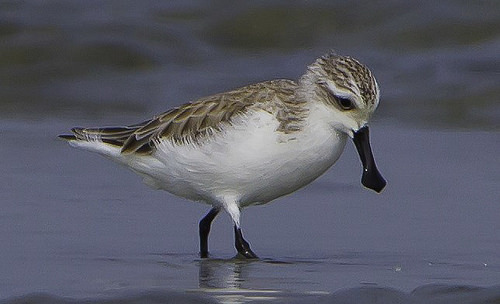
I love spoon-billed sandpipers because their beaks are just so different from what you typically think of in a shorebird/wader
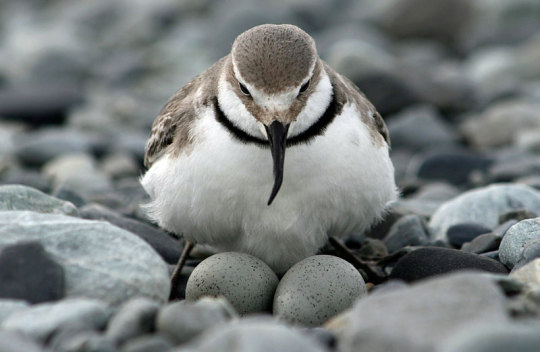
Wrybills always have a bill that bends to one side. No one is sure why, but it may allow them to watch the sky for predators while foraging
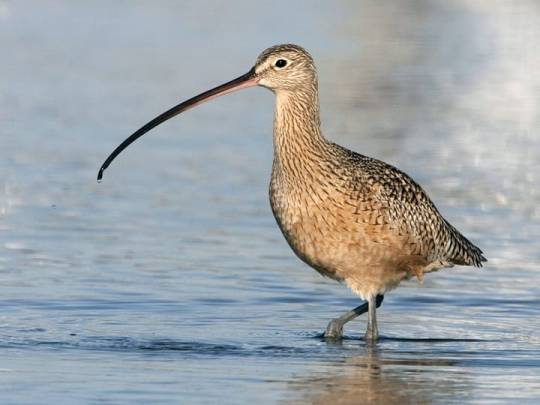
Long-billed curlews have such absurdly long bills in order to reach buried food that other birds can’t reach.
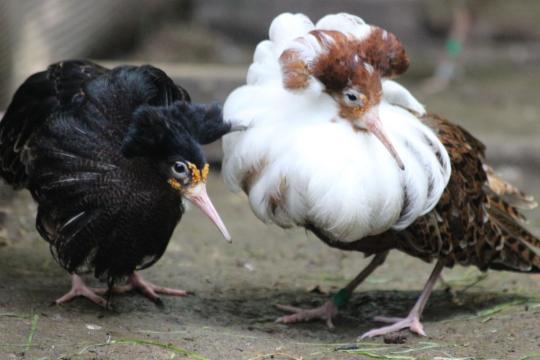
Ruffs have extravagant breeding plumage, which comes in a huge variety of colours. I’ve always meant to check out the social implications and effects of this – is it speciating?
Ruffs are lek breeders and actually have three different types of male! The dark-colored ones are the dominant males strut around and display their plumage to attract females. The lighter colored ones are called satellite males, and they hang out around the edges of the dominant male’s displaying ground and mate with females while the dominant male is distracted (usually by a rivaldominant male). There is a rare third type of male called a “faeder” which has no display feathers and looks like a female ruff, though it is larger. It appears to be a mimic of the females that uses its appearance to sneak past the other males and even mating with them to gain access to the females to mate, but this might not actually be the case, since half the time the faeder is the one doing the mounting when mating with other males, indicating that the more typical males probably know it isn’t a female. Long story short, ruffs are weird and also apparently bisexual.
Oh I ADORE how ruffs do Gender Roles. They’ve got an entire system worked out that is just so obscure for humans; it clearly makes perfect sense to them, and all we can do is try to falteringly, helplessly try to put it in our own language. I believe they’re the only species to use “faeder” in that way, although males all over the animal kingdom practice variations of territorial/satellite strategy.

 Tumblr backup