There are some very angry people in my notes and inbox this week. Apparently, I am “toxic” and “evil” because I reported the results of 50 years of weight-loss research. They are mad because the research definitively and conclusively demonstrates that long-term maintenance of weight loss is virtually impossible. They also think I am “delusional” because I criticize the medical establishment for keeping this fact a secret from the general public.
This knowledge is why doctors became so desperate that they resorted to amputating parts of the digestive tract in the hopes that it might finally result in long-term weight-loss. Except oops, that doesn’t work either. Oh, and it causes death, addiction, malnutrition, and suicide. Whoopsie daisy.
Diet culture is fucking toxic. And people deserve to know the truth.
You are wrong!!! All you have to do is try xyz and you can lose weight!!
I will believe claims like this when you show me a meta analysis of at least 10 random and controlled experiments, published in a high caliber empirical journal. That is the burden of proof. I provided such proof of my claims (indeed, the first two links I provided reference multiple meta-analyses supporting my claims). Now it’s your turn.
Apparently my first link does not work. Here is another. And another. And the citation, it is readily available from google sources.
Mann, T., Tomiyama, A. J., Lew, A. M., Westling, E., Chatman, J., & Samuels, B. (2007). Medicare’s search for effective obesity treatments: Diets are not the answer. American Psychologist, 62, 220-233. PMID: 17469900
The salt in the DC fandom when you even hint that Wonder Woman might be able to defeat Thanos… that shit is going on the rim of my margarita.
Translation: ‘I don’t think an actual demi-Goddess who is known as The God-Killer with no code against killing would be capable of defeating a giant grape that failed high school Economics.’
It’s been a while since I’ve done one of these, so I want to introduce myself to everyone, whether you follow me already or may in the future.
Hi! I’m Tenoko1!
This is, primarily, a Supernatural blog! These are the freaking nerds that have ruined changed my life.
Because of these life-ruining nerds, I also write a lot of fic you may enjoy! You can find my AO3 here. Several of them have fanart included within that are so amazing. Fandom has such talented people. The main pairing is always Destiel, though Sam gets shipped around like UPS. I pretty much throw a dart at a board and go “Challenge Accepted!!”.
And because fic should be as available as possible, I also spend a lot of time creating podfics: that’s audiobook versions of fics. I love these stories so much I’m willing to read them to you to make sure you get to experience them. That’s the highest rec you can get. Also, you can read fic while doing chores or commuting. A++++
I use to do live-reaction vids for new episodes, but really don’t have the time anymore.
But I still do video book reviews– and end up with quite a few reaction gifs from those that are just sort of on-point, ngl.
I also like making e-book covers for fics as I discover them and add them to my Kindle to read.
Also, I will fangirl SO MUCH over the cast and their families. Like, just all of them. I love them. They’re all good beans. And their kids are all too cute! But seriously, this cast. Ugh. UGGGHHHHH. Life ruiners. I love them.
Aside from that, you will occassionally see me talking in regarding to videogames and my gaming channel on Twitch:
You’ve heard of “making writing a habit,” and you’ve tried, but the pressure to write fills you with horrible pain and dread. You spend all your time wishingyou could write but somehow never writing. The “make it a habit” approach doesn’t work for you. But you still wantto write, maybe even regularly. Is there nothing you can do?
Here is an alternative approach to try. A rehab program, as it were, for writers with a psychological “writing injury” that has destroyed their desire to write and replaced it with shame, anxiety and dread.
If you have a writing injury, you probably acquired it by being cruel to yourself, by internalizing some intensely critical voice or set of rules that crushes your will to write under the boot-heel of “you should.” “You should be writing better after all the years of experience you’ve had.” “You should be writing more hours a day, you’ll never get published at this rate.” “You should write more like [Hilton Als/Jeffrey Eugenides/Octavia Butler/Terry Pratchett/etc.].” “You should write faster/more/better/etc./etc.”
You know what, though? Fuck all that. Self-abuse may have featured heavily in the cool twentieth-century writer’s lifestyle, but we are going to treat ourselves differently. Because 1) it’s nicer, and 2) frankly, it gets better results. My plan here is to help you take the radical step of caring for yourself.
1) First of all: ask yourself why you aren’t writing.
Not with the goal of fixing the problem, but…just to understand. For a moment, dial down all of the “goddammit, why can’t I just write?”blaringin your head and be curious about yourself. Clearly, you havea reason for not writing. Humans don’t do anything for no reason. Try to discover what it is. And be compassionate; don’t reject anything you discover as “not a good enough excuse.” Your reasons are your reasons.
For me, writing was painful because I wanted it to solve all my problems. I wanted it to make me happy and whole. I hated myself and hoped writing would transform me into a totally different person. When it failed to do that, as it always did, I felt like shit.
Maybe writing hurts because you’ve loaded it with similarly unfair expectations. Or maybe you’re a victim of low expectations. Maybe people have told you you’re stupid or untalented or not fluent enough in the language you write in. Maybe writing has become associated with painful events in your life. Maybe you’ve just been forcedto write so many times that you can no longer write without feeling like someone’s making you do it. Writing-related pain and anxiety can come from so many different places.
2) Once you have some idea of why you’re not writing…just sit with that.
Don’t go into problem-solving mode. Just nod to yourself and say, “yes, that’s a good reason. If I were me, I wouldn’t want to write either.” Have some sympathy for yourself and the pain you’re in.
3) Now…keep sitting with it. That’s it, for the moment. No clever solutions. Just sympathize. And, most importantly, grant yourself permission to notwrite, for a while.
It’s okay. You are good and valuable and worthy of love, even when you aren’t writing. There are still beautiful, true things inside of you.
Here’s the thing: it’s very hard for humans to do things if they don’t have permission notto do them. It’s especially hard if those things are also painful. We hate feeling trapped or compelled, and we hate having our feelings disregarded. It shuts us down in every possible way. You will feel more desire to write, therefore, if you believe you are free not to write, and if you believe it’s okaynot to do what causes you pain.
(By the way: not having permission isn’t the same as knowing there will be negative consequences. “If I don’t write, I won’t make my deadline” is different from “I’m not allowed not to write, even if it hurts.” One is just awareness of cause and effect; the other is a kind of slavery.)
4) For at least a week, take an enforced vacation from writing, and from any demands that you write. During this time, you are not permitted to write or give yourself grief for not writing.
This may or may not be reverse psychology. But it’s more than that.
Think of it as a period of convalescence. You’re keeping your weight off an injury so it can heal, and what’s broken is your desire to write. Pitilessly forcingyourself to write when it’s painful, plus the shame you feel when you don’t write, is what broke that desire. So, for a week (or a month, or a year, or however long you need) tell yourself you are taking a doctor-prescribed break from writing.
This will feel scary for some folks. You might feel like you’re giving up. You might worry that this break from writing feels too good, that your desire to write might never return. All I can say is, I’ve been there. I’ve had all those fears and feelings. And the desire to write did return. But you gotta treat it like a tiny crocus shoot and not stomp on it the second it pokes its little head up. Like so:
5) Once you feel an itch to write again—once you start to chafe against the doctor’s orders—you can write a tiny bit. Only five or ten minutes a day.
That’s it. I’m serious: set a timer, and stop writing when the time’s up. No cheating. (Well…maybe you can take an extra minute to finish your thought, if necessary.)
Remember: these rules are not like the old rules, the ones that said, “you must write or you suck.” These rules are a form of self-care. You are not imposing a cruel, arbitrary law, you are being gentle with yourself. Not “easy” or “soft”—any Olympic athlete will tell you that hard exercise when you’ve got an injury is stupid and pointless, not tough or virtuous. If you need an excuse to take care of yourself, that’s it: if you’re injured, you can’t perform well, and aggravating the injury could take you out of the competition permanently.
For the first few days, all of the writing you do should be freewriting. Later, you can do some tiny writing exercises. Don’t jump into an old project you stalled out on. Think small and exploratory, not big and goal-oriented. And whatever you do, don’t judge the output. If you have to, don’t even read what you write. This is exercise, not performance; this is you stretching your atrophied writing muscles, not you trying to write something good. At this stage, it literally doesn’t matter what you write, as long as you generate words. (Frankly, it would be kind of weird and unfair if your writing at this point was good.)
6) After a week, you can increase your time limit if you want. But only a little!
Spend a week limiting yourself to, say, twenty minutes a day instead of ten. When in doubt, set your limit for less than you think you’ll need. You want to end each writing session feeling like you couldkeep going, not like you’re crawling across the finish line.
Should you write every day? That’s up to you. Some people will find it helpful to put writing on their calendar at the same time each day. Others will be horribly stifled by that. You get to decide when and how often you write, but two things: 1) think about what you, personally, need when you make that decision, and 2) allow that decision to be flexible.
Remember, the only rule is, don’t go over your daily limit. You always have permission to write less.
And keep checking in with yourself. Remember how this program began? If something hurts, if your brain is sending you “I don’t wanna” signals, respect them. Investigate them, find out what their deal is. You might decide to (gently) encourage yourself to write in spite of them, but don’t ignore your pain. You are an athlete, and athletes listen to their bodies, especially when they’re recovering from an injury. If writing feels shitty one day, give yourself a reward for doing it. If working on a particular project ties your brain in knots, do a little freewriting to loosen up. And always be willing to take a break. You always have permission not to write.
7) Slowly increase your limit over time, but always have a limit.
And when you’re not writing, you’re not writing. You don’t get to berate yourself for not writing. If you find yourself regularly blazing past your limit, then increase your limit, but don’t set large aspirational limits in an effort to make yourself write more. In fact, be ready to adjust your limit lower.
When it comes to mental labor, after all, more is not always better. Apparently, the average human brain can only concentrate for about 45 minutes at a time, and it only has about four or so high-quality 45-minute sessions a day in it. That’s three hours. So if you set your daily limit for more than three hours, you may be working at reduced efficiency, when you’d be better off saving up your ideas and motivation for the next day. (Plus, health and other factors may in fact give you less than 3 good hours a day. That’s okay!)
Of course, if you’re a professional writer or a student, external pressures may force you to write when your brain is tired, but my point is more about attitude: constant work is not necessarily better work. So don’t make it into a moral ideal. We tend to think that working lessis morally weak or wrong, and that’s bullshit. Taking care of yourself is practical. Pushing yourself too hard will just hurt you and your writing. Also, your feelings are real and they matter. If you ignore or abuse them, you’ll be like a runner trying to run on a broken ankle.
I know I’m going to get someone who says, “if you’re a pro, sometimes you gotta ignore your feelings and just get the work done!”
NO.
You can, of course, choose to work in spite of any pain you’re feeling. But ignore that pain at your peril. Instead, acknowledge the pain and be compassionate. Forgive yourself if pain slows you down. You are human, so don’t hold your feet to the fire for having human limitations. Maybe a deadline is forcing you to work anyway. But make yourself a cup of hot chocolate to get you through it, literally or metaphorically. Help yourself, don’t force yourself. If you’ve had a serious writing injury, that shift in attitude will make all the difference.
In short: treat yourself as someone whose feelings matter.











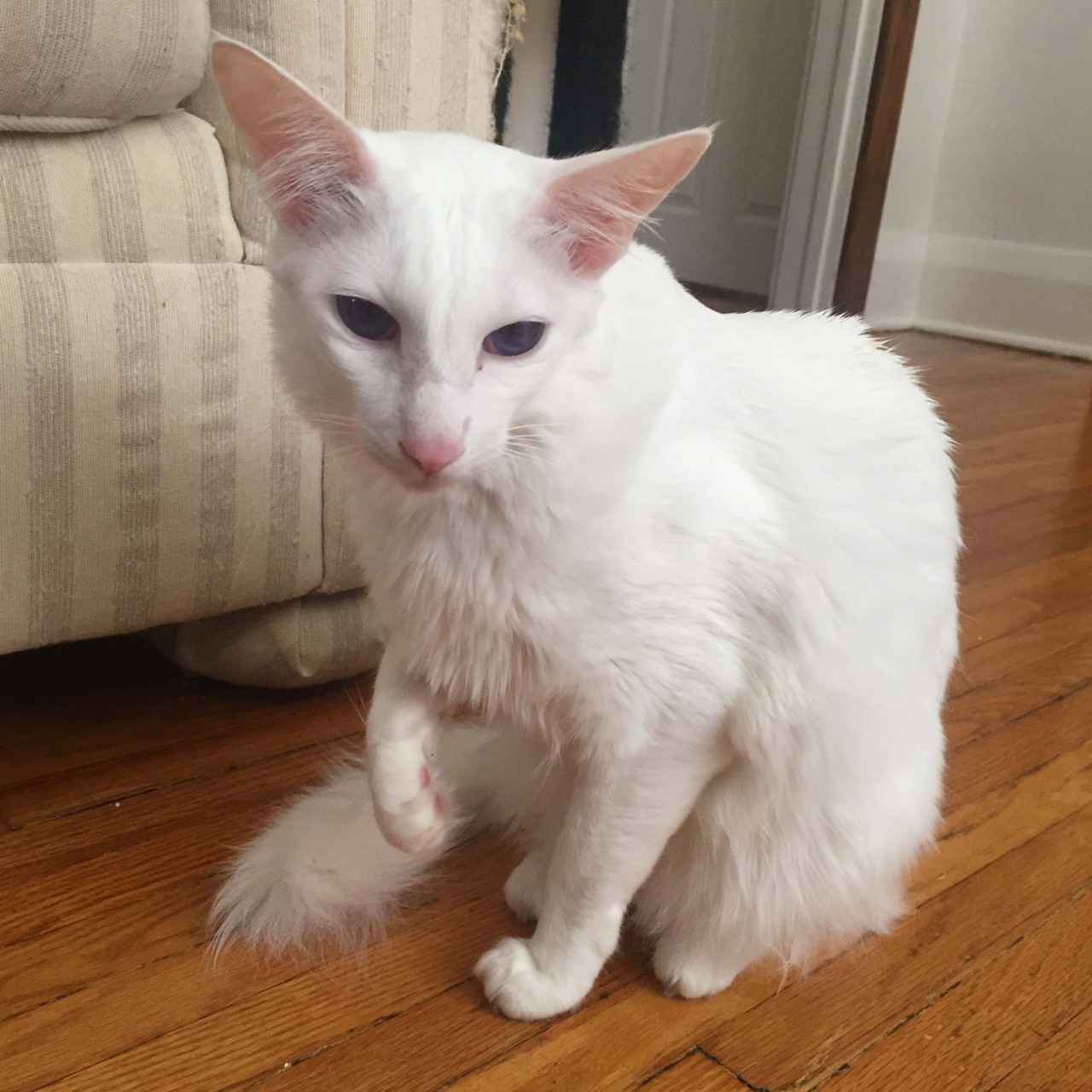
that’s what you get for chasing wasps my dear



 Tumblr backup