Ooh, I know someone with an occupied uterus who would appreciate these! They’re actually really cute!
from now on the only gender is goth
this video has 10,000 notes on tumblr but 1,600 dislikes on youtube. C’mon people! if you love this concept show Celine some love because otherwise her marketing team will think this idea was a failure
Seriously, like this video. She’s got like 900 likes and over 2000 dislikes and the comments are fucked up. She deserves some love. And honestly, if it means I can find cute shorts that are longer than an inch below the crotch for my daughter, I’ll be ecstatic
This is a gender neutral fashion line for kids, and it’s honestly pretty awesome. It’s expensive (as celebrity fashion lines tend to be) but there’s a lot of grey, black, and soft yellow and patterns that I would wear myself tbh.
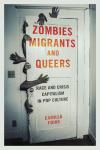
Zombies, Migrants, and Queers: Race and Crisis Capitalism in Pop Culture
(2017)
The alarm and anxiety unleashed by the Great Recession found fascinating expression across popular culture. Harried survivors negotiated societal collapse in The Walking Dead. Middle-class whites crossed the literal and metaphorical Mexican border on Breaking Bad or coped with a lack of freedom among the marginalized on Orange Is the New Black.
Camilla Fojas uses representations of people of color, the incarcerated, and trans/queers–vulnerable populations all–to work through the contradictions created by the economic crisis and its freefalling aftermath. Television, film, advertising, and media coverage of the crisis created a distinct kind of story about capitalism and the violence that supports it. Fojas shows how these pop culture moments reshaped social dynamics and people’s economic sensibilities and connects the ways pop culture reflected economic devastation. She also examines how these artifacts illuminated parts of society usually kept off-screen or on the margins even as they defaulted to stories of white protagonists.
Camilla Fojas teaches in media studies and American studies at the University of Virginia. Her books include Border Bandits: Hollywood on the Southern Frontier andIslands of Empire: Pop Culture and U.S. Power.

















 Tumblr backup